Hey Folks
5/10/2013

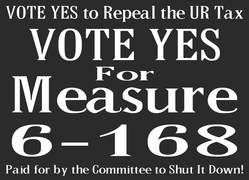
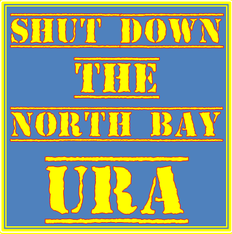
I thought that you all should see who is supporting Port Commissioner Rick Goche.
Two college candidates disavow PAC
Rob T.  

Hey Folks,
04/15/2013
 
Don Chance and Jill Halliburton are campaigning for two different seats on the Port of Bandon.  Jill is running for
position #1 and Don is running for position #3. Both of these candidates have more than proven their leadership skills with their unwavering fight to stop the Bandon Marsh Expansion.
 
The following are the letters of intent for both candidates.  
 
Would you please contact me if you would like to help one of the candidates?  We need campaign volunteers, letters to the editor, and campaign donations.  Jill and Don have been working for many years for the people, so I know I am going to work very hard to get them elected.  
 
Rob Taylor
541-347-9942
Cooscountywatchdog@hotmail.com  

Read more about the Candidates:


April 8, 2013

PORTLAND, Ore. – Americans for Prosperity-Oregon and Cascade Policy Institute have released a new report, Facing Reality 2013, which calls attention to limited government and pro-growth solutions to current Oregon budget problems. 

“The Legislature continues to give citizens the false choice of  either failing our children or increasing taxes,” stated Karla Kay  Edwards, Oregon State Director of Americans for Prosperity. “Facing  Reality clearly
demonstrates that Oregon can invest in our children’s  education without negatively impacting our slow economic recovery.”

The report is based on a “Reality Based Budgeting” approach,  encouraging political leaders to face
reality, stop procrastinating, and adopt ideas to lower the cost of government and get the economy going  again.

“It’s not too late to refocus Oregon government on its core  functions, reduce costs and get out of areas it has no
business in, such as the distribution of liquor,” said Steve Buckstein, Founder and  Senior Policy Analyst at Cascade Policy Institute.

The report focuses on five public policy areas:

- Privatize Liquor Distribution and Sales
- Reduce Corrections Costs
- Eliminate the PERS Pick-Up
- Align State Employee Compensation with Private Sector Compensation
- Enact Right to Work Legislation


With solutions to controversial topics such as PERS reform, the  report authors challenge legislative leaders to take effective steps to  recharge the state economy.

“It is time for the Oregon Legislature to ‘Face Reality,’ as  Oregonians have had to do, and adopt these
non-partisan  recommendations,” said Edwards. 
"The price of freedom is eternal vigilance."--Thomas Jefferson


Hey Folks,

The link below is to an article about the redefining of the legal status of a certain group of corporations.  B-corporations are another mechanism corporations will use to funnel tax money into enviro-companies through government economic development funding, special taxing classifications and exemptions, and of course, state and federal grant programs…  Politicians enact laws that corporations have to react too and this is another fine example of that kind of situation……Rob T.

What are Benefit Corporations?

Picture
www.BCorporation.net

Legislation

Thousands of visionary business leaders are building the foundation for a new economy with millions of high quality jobs and improved quality of life in
communities around the world. To serve them, B Lab and the community of Certified B Corporations have worked to support legislation around the country
to create a new kind of corporation called the benefit corporation.

 Benefit corporation legislation not only gives businesses the freedom and legal protection to pursue the triple bottom line, but it gives individual
citizens something positive for which to advocate.


According to a White Paper from a group of corporate attorneys, the benefit corporation is the corporate structure that best meets the needs of the growing number of entrepreneurs and investors who
seek to use business as a tool to solve social and environmental problems.


Benefit corporations are exactly the same as traditional corporations except for three little things that make them game-changers: higher standards of
purpose, accountability, and transparency. Benefit corporation laws have been enacted in 11 states and are moving forward in 16 others. Legislation has
enjoyed overwhelming bi-partisan support -- including 12 unanimous votes -- because the legislation is 100% voluntary and costs states nothing.

Please visit benefitcorp.net to find resources for businesses and attorneys interested in learning more.

The Difference Between Benefit Corporations and Certified B Corps

 Benefit Corporations and Certified B Corporations are often, and understandably, confused. Both are sometimes called B Corps. They share much in
common and have a few important differences.

 Certified B Corporation is a certification conferred by the nonprofit B Lab. Benefit corporation is a legal status administered by the state.

 Benefit corporations do NOT need to be certified. Certified B Corporations have been certified as having met a high standard of overall social and
environmental performance, and as a result have access to a portfolio of services and support from B Lab that benefit corporations do not.


The Rob Taylor Report

March 4, 2013
 
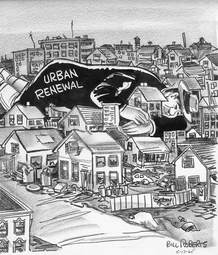
Several years ago, it became painfully obvious that the City Council of Bandon was going on a political spending spree funded by public tax dollars.   They planned to expand the budget of the city’s Urban Renewal Agency (URA), which was going to increase the local debt, while draining necessary money from ten other overlapping taxing districts. 
 
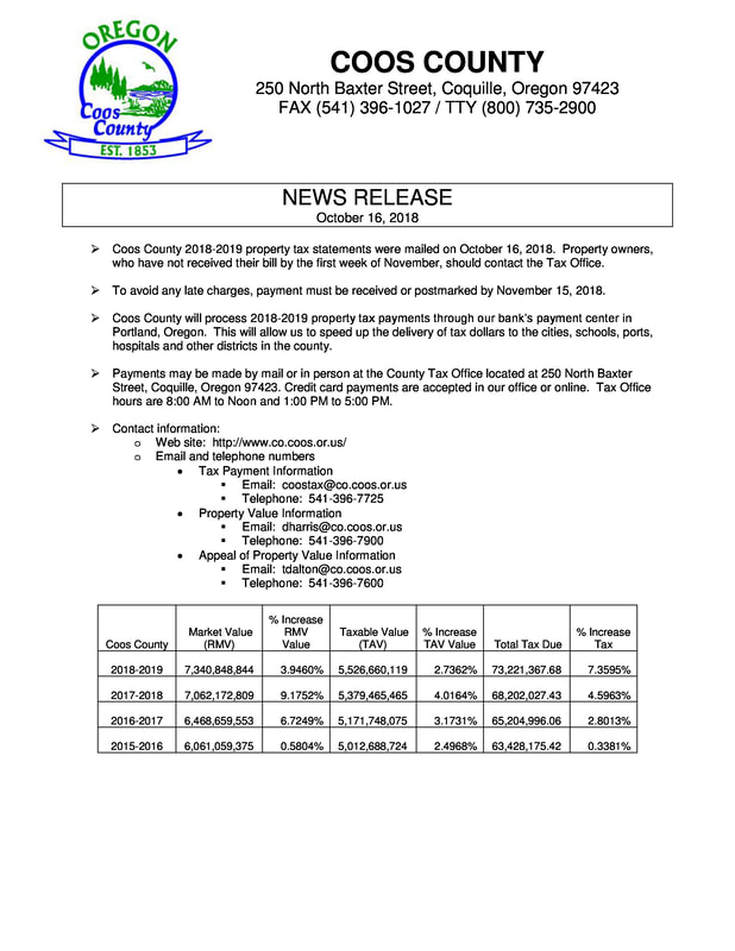
As expected, Bandon, a city of 3300 residents, increased the maximum indebtedness of the URA area Plan #1 from $5 million to $12 million and extended it out to the year 2033.  This is just one of seven Urban Renewal districts in Coos County.   In Fiscal Year 2012, these agencies drained over $3 million dollars in property taxes, which is 5% of the total collected annually for the county.  That amount is increasing by 5.6% every year and that percentage is growing.  Currently, Multnomah County sacrifices 25% of every dollar collected in property taxes to Urban Renewal and much of that money goes into the pockets of very wealthy developers and private consultants.  
 
Last year the State of Oregon lost over $182 Million in taxes due to “tax increment financing,”  which is the process Urban Renewal Agencies use to skim money from schools,  colleges, hospitals, fire departments, law enforcement and many other taxing districts that provide the basic services on which people depend.  The state’s school districts suffer the largest loss of money, up to 45% of the funding comes from their coffers, and the state has to backfill that loss with the revenue provided by our income taxes.  The Oregon legislature has to approve the backfill program annually.  Then cities and counties use Urban Renewal funding to leverage grant money from state and federal government agencies.  Those grants also come from other sources of tax revenue paid for by us, the taxpayer.  It becomes apparent that the entire process is a pyramid scheme developed as a mechanism to provide sustainability to the corporate welfare system, with only a minimal input from citizens.  
 
Eventually this process will start to consume too much of our taxes and will leave many municipalities financially ravaged.  Cities and counties cannot go into bankruptcy according to OR law, so they use the debt from Urban Renewal to subsidize their budgets through varying infrastructure projects.  A city or county does not suffer damage to their credit rating if their Urban Renewal Agency goes belly-up, because under current law it is an independent entity legally separate from the city or county of origin.  
 
In February, Senator Jeff Kruse introduced Senate Bill 478, a measure that would take Urban Renewal out of the hands of greedy, misguided politicians and put those agencies under the control of the voter.  Senate Bill 478 will allow the voters of Oregon to decide the fate of these over-bloated, bungled bureaucracies.  The bill would allow the voter to decide on the creation of an URA plan, or an increase in the URA debt or any expansion of any existing URA areas.  
 
The people of Oregon have to support this bill by calling or emailing their Senator and demand that they vote in favor of the people by voting for SB 478.   Right now, the bill is in the Committee on Business and Transportation of the state senate.  The following Senators are on that committee and people can contact them via email. 
  
Sen. Beyer                   Sen.LeeBeyer@state.or.us

Sen. Starr                      Sean@BruceStarr.org

Sen. Edwards                Sen.ChrisEdwards@state.or.us

Sen. Girod                      Sen.FredGirod@state.or.us

Sen. Monroe                  MonroeR@leg.state.or.us

Sen. Thomsen               Sen.ChuckThomsen@state.or.us 
 
Please, send a message telling the Senators to support SB478 by sending this bill to the floor of the Senate for a full vote and passing it onto the House of Representatives.  Urban renewal matters should be under direct control of the voting public, as it is the public, and the public’s children, burdened with this very heavy public debt.


Hey Folks,

As soon as they make the number available for this bill I will post it on the site.  This is a good start to a big problem......Rob T....

Sen. Knopp & Rep. Conger introducing PERS bill

by In the news Tuesday, February 19. 2013
 
Sen. Knopp & Rep. Conger introducing PERS bill" 

  Salem, OR – Senator Tim Knopp (R-Bend) along with Representative Jason Conger (R-Bend) are set to provide fiscal relief to communities struggling with spiraling Public Employees Retirement System (PERS) expenses. Oregon agencies have to cut their service because of staggering increases in retirement expenses. The bill will remove legislators from being members of PERS.


AFP Action Alert:  HB2800

Another legislative hearing has been set this Monday, February 18th at 3pm in Room F to continue the
testimony on HB2800. HB2800 essentially offers a blank check to fund the boondoggle known as the Columbia River Crossing (CRC). We need you to help us stop this bill from ever moving out of this joint legislative committee by coming and testifying at the hearing on Monday and to make phone calls and send emails to all of the legislators on the committee.

Why should you be concerned about CRC? Because last week at the hearing it became very clear that this project would essentially tie up all of the statewide gas tax funding in Oregon. As a result, most other projects around the state will either be put on hold or slowed down. This will result in creating pressure statewide to increase the gas tax in 2015. Are you concerned yet?

 Here are some other important reasons why this CRC funding bill HB2800 should be stopped:

 ·The CRC will worsen traffic gridlock in other parts of Portland in residential neighborhoods, and does
nothing to increase overall freight mobility which is critical to the future of this region.

 ·The proposal is based on outdated and incorrect information.

 ·The construction and financing of the CRC will impact the ability to maintain existing roads and bridges
throughout Oregon.

 ·Clark County Commissioners voted on Tuesday, February 12 to officially oppose the project. However,
entrenched Oregon bureaucrats don’t seem to care. They are willing to move forward despite a critical partner’s opposition.

 ·There is clearly no financial plan or accountability if the project has cost over-runs. In fact, bureaucrats denied there was even a possibility of cost over runs on this project and therefore no need to plan for alternative funding. I can already picture the half built bridge to nowhere.

Please plan to attend the legislative hearing on Monday, February 18that 3pm in room F. And make a point to speak with every member of the Joint Interstate 5 Bridge Replacement Project committee before the hearing.Please be sure to also submit comments to the Committee Staffer so that your comments become part of the official legislative record. 

Committee Staffer:patrick.brennan@state.or.us

 Co-Chair Representative Cliff Bentz
503-986-1460

 Co-Chair Representative Tobias Read
503-986-1427

 Co-Chair Senator Lee Beyer
503-986-1706

 Co-Chair Senator Bruce Starr
503-986-1715

 Senator Chuck Thomsen
503-986-1726

 Senator Chris Edwards
503-986-1707

 Senator Fred Girod
503-986-1709

 Senator Rod Monroe
503-986-1724
Thank you for all you do for economic freedom!
 
Sincerely, 
 Karla Kay Edwards
State Director Americans for Prosperity - Oregon


The Fiscal Cliff:  To Jump or Not to Jump

 I Spy can now be heard on two different stations at different times! 
 

Listen on Saturday:
11:00 to noon (Pacific time
) on KYKN (1430-AM) or, if you’re outside of the Salem, OR, listening area, go to www.kykn.com and hit the "listen live" button.
 
Or on Sunday, 7:00  –  8:00
p.m. (Pacific time) tune to
KAJO (1270-AM) or if you’re outside of the Grants Pass, OR, listening area, go
to
www.kajo.com and hit the listen live button at the top of the page.


 Our Guests: U.S. Congressman Tom McClintock & Economist Dr. Eric Fruits, co-author of ALEC’s Center for State Fiscal Reform Report: "Tax Myths Debunked"

 This week:  Winston Churchill once said, “We contend that for a nation to try to tax itself into prosperity is like a man standing in a bucket and trying to lift himself up by the handle.”  While President Obama isn’t talking about taxing our way to prosperity anymore, he does want to spend our way to prosperity.  In other words, he’s stopped standing in a bucket while trying to lift it. Now he’s pouring water from one bucket into another and claiming we have more water.


Hey Folks,
The link below will take you to an article about the Federalization of local Urban Renewal Agencies.  Through HUD and EPA matching Grant programs, the fed plans on implementing their agenda with local property tax dollars.  This is the idea of Private-Public Partnership and taken to its extreme, it becomes fascism....Rob T.  

Beaverton to host first of 100 White House meetings on federal-city cooperation

Federal officials will kick off a series of visits to 100 cities around the nation Thursday as part of a White House program to support urban revitalization. First stop: Beaverton. 

The city will host the feds at a daylong symposium to discuss how government agencies, nonprofits and businesses can help the city. 

The event is the first in a new White House "Connecting Your Community" program, in which national leaders plan to meet with representatives of 100 cities to pair federal programs with local needs. The next 99 cities in the program have not been named. 

Beaverton's agenda includes revitalizing its downtown urban renewal district, redesigning Southwest Canyon Road and constructing a community health center.

Here is a comment on the article:

tombdragon
   How  fitting that they will meet at a place - the Beaverton Round - that serves as a metaphor for the failure of our local Urban Renewal, and the failed idealism of the Obama Administration.


Hello,
Below are the definitions of two different Federal Programs designed to procure private property and take it out of production and off the tax roll----all in the name of Environmental Restoration.  Rob T.  

Land and Water Conservation Fund

From Wikipedia, the free encyclopedia
The United States' Land and Water Conservation Fund(LWCF) is a Federal program that was established by Act of Congress in 1964 to provide funds and matching grants to federal, state and local governments for the acquisition of land and water, and easements on land and water, for the benefit of all Americans.[1] The main emphases of the fund are recreation and the protection of national natural treasures in the forms of parks and protected forest and wildlife areas. 

The LWCF has a broad-based coalition of support and oversight, including the National Parks Conservation Association, The Wilderness
Society
, and the Land Trust Alliance.

 The primary source of income to the fund is fees paid to the Bureau of Ocean Energy Management, Regulation and Enforcement by companies drilling offshore for oil and gas. Congress regularly
diverts most of the funds from this source to other purposes, however.  Additional minor sources of income include the sale of surplus federal real
estate and taxes on motorboat fuel.[1]

 Funds from the Land and Water Conservation Fund have been utilized over the years on projects both large and small. LWCF has helped state agencies
and local communities acquire nearly seven million acres (28,000 km²) of land and easements controlling further land, developed project sites including such
popular recreational areas as Harper's Ferry in West Virginia, California's Big Sur Coast, and the Greater Yellowstone Ecosystem in Montana, helped maintain Yellowstone National Park, and helped to build and maintain "thousands of local playgrounds, soccer fields, and baseball diamonds."[2]

 Though LWCF is authorized with a budget cap of $900 million annually, this cap has been met only twice during the program's nearly four decades of
existence.

 The program is divided into two distinct funding pools: state grants and federal acquisition funds. The distribution formula takes into account population density and other factors.

 On the federal side, each year, based on project demands from communities as well as input from the federal land management agencies, the President makes recommendations to Congress regarding funding for specific LWCF projects. In Congress, these projects go through an Appropriations Committee review process. Given the intense competition among projects, funding is generally only provided for those projects with universal support. Initially authorized for a twenty-five-year period, the LWCF has been extended for another twenty-five years, its current mandate running until January
2015.

National Fish and Wildlife Foundation

 From Wikipedia, the free encyclopedia
 The National Fish and Wildlife Foundation (NFWF) was created by the U.S. Congress in 1984 to protect and restore fish and wildlife and their
habitats. NFWF directs public dollars to critical environmental needs and matches those investments with private contributions. NFWF supports
science-based, results-oriented projects across the United States and the world.

 NFWF provides grants on a competitive basis to protect imperiled species, promote healthy oceans and waterways, improve wildlife habitat, advance
sustainable fisheries and conserve water for wildlife and people. Birds, freshwater fish, marine and coastal ecosystems, wildlife and habitat are focal
areas. NFWF’s Congressional mandate is to connect government agencies, non-profit organizations, corporations and individuals to combine federal funds
with private donations for effective, results-oriented conservation projects.  Since its establishment in 1984 through 2011, NFWF has awarded over 11,600
grants leveraging $576 million in federal funds into more than $2 billion for conservation.
 
As part of its Congressional charter, NFWF also serves as a neutral, third-party fiduciary to receive, manage and disburse funds that originate from
court orders, settlements of legal cases, regulatory permits, licenses, and restoration and mitigation plans. The funds are managed under NFWF’s
Impact-Directed Environmental Account (IDEA) program. NFWF works with federal agencies, regional, state, and local organizations, corporations and philanthropic institutions to apply these funds to conservation projects.

 NFWF has no membership and does not advocate or litigate.

NFWF is a public charity under the IRS tax code and treated as a private corporation established under Federal law. Under the terms of its enabling legislation, NFWF is required to report its proceedings and activities annually to Congress.

Profile of grantees. The Foundation has tended to make grants for land and easement acquisitions to larger, more established organizations with experienced staff who have the know-how to put together a grant proposal and complete an easement project.  These organizations include: The Nature Conservancy, Trust for Public Land, Natural Resources Conservation Service, US Fish and Wildlife Service, and large regional land trusts.  These major organizations received about two-thirds of the 73 grants for interests in land reviewed by the consultants under the General Applications program between 1986 and 2002.

Federal Private Lands Programs for Bird Conservation
Funding By Federal Programs Department 
Agency Program FY 2002 Approp. M
 MULTIPLE AGENCY 
Land and Water Conservation Fund           $450.0             (FY2001)

National Fish and Wildlife Foundation       $ 17.1             (FY2001)


Hey Folks,
The links below are to three different articles with some historic relevance to the LWCF and the NFWF.  Both agencies function to destroy local economies through the proccess of acqusition from "willing sellers" and use the land for mitigation purposes.....Rob T.  

View from Sapsucker Woods

Since 1965 the recorded balance in offshore oil revenues credited to, but not appropriated from, the LWCF is $17 billion. Imagine the scale of conservation that could be accomplished if we decided to “settle up” and expend these technically already conservation-committed dollars! Much more realistic and urgent, however, is the need to begin committing the full, legally authorized LWCF amount every year within our federal budget. Since taking office, Secretary of the Interior Ken Salazar has announced repeatedly his commitment to “fully funding the Land and Water Conservation Fund,” but previous administrations have made similar statements, without result.  Today signs are again promising: the proposed fiscal year 2011 federal budget requests more than $600 million in LWCF funding (including $384 million for federal land acquisition, $100 million for the USDA Forestry Legacy Program, $85 million for the cooperative endangered species fund, and $50 million for state transfers and grants, according to the National Fish and Wildlife Foundation), and bills are being discussed in Congress that would mandate fully funding the LWCF.


Senators Introduce Package of Sportsmen's Bills

 "I am pleased that this amendment significantly advances the cause of making public lands more accessible for multiple uses including hunting, fishing, and other outdoor recreation," said Senator Thune.   "Our amendment reauthorizes the North American Wetlands Conservation Act and the National Fish and Wildlife Foundation. This amendment also includes language that I've advocated for in the past which would ensure that the EPA cannot regulate the use of lead ammunition and lead in fishing gear."
 
One provision within the legislation would direct 1.5 percent of Land and Water Conservation Fund (LWCF) dollars towards priority recreational access projects.  The “Making Public Lands Public” provision is intended to improve access to Bureau of Land Management and U.S. Forest Service lands where access is blocked by private land. Priority access easements and acquisitions often do not fare well when directly competing for limited LWCF funds with large-scale habitat conservation efforts. Dedicating a small percentage of LWCF dollars towards these small but critical projects has the potential to significantly improve sportsmen’s access.


Landmark Legislation Will Benefit America's Lands, Water, and Wildlife

May 11, 2000
 https://forms.house.gov/defazio/pf_051100ENRelease.htm 
 
CARA provides $2.8 billion in annual funding for important conservation and recreation programs. Since 1965, revenues from offshore oil and gas drilling have been earmarked for the Land and Water Conservation Fund (L&WCF), which now has an unspent surplus of $13 billion.  The bill would provide full funding for the L&WCF which supports federal and state open space protection and park improvements.  In addition, the bill allocates oil and gas revenues for coastal  conservation, fish and wildlife, urban parks, historic preservation, federal and Indian lands restoration, farm and forest land protection, and endangered species recovery programs.


    Subscribe to our Newsletter

    Categories

    All
    A.F.P.
    Agenda 21
    B.L.M.
    B.O.C.
    County Charter
    Democratic Party
    Educational
    Elections
    E.P.A.
    F.E.M.A.
    Individual Rights
    I Spy Radio
    Legislation
    Letter To Editor
    Mary Geddry
    News Wave
    O&C Land
    O.D.F.W.
    O.D.O.T.
    O.R.C.
    Oregon Watchdog
    O.W.E.B.
    P.E.R.S.
    Public Events
    Regulation
    Republican Party
    S.A.O.V.A.
    The Bandon Marsh
    The Economy
    The Rob Taylor Report
    The Supreme Court
    The Tea Party
    Urban Renewal
    U.S.D.A.
    U.S.F.S.
    U.S.F.W.S.

    Archives

    June 2013
    May 2013
    April 2013
    March 2013
    February 2013
    January 2013
    December 2012
    November 2012
    October 2012
    September 2012
    August 2012
    July 2012
    June 2012
    May 2012
    April 2012
    March 2012
    February 2012
    January 2012
    December 2011
    November 2011
    October 2011
    September 2011
    August 2011

    About the Author

    Rob Taylor is a concerned citizen tired of government waste.
    The blog is used to post information about events & issues that will have some effect on the people of Coos County.